
The Beauty and Science Behind Our Catalyzed Conversion Varnish Finish
When it comes to fine furniture, the finish is just as important as the design and craftsmanship. It’s the final touch that not only enhances the wood’s natural beauty, but also protects it for years to come. At Barkman Furniture, we take great pride in our finishing process—and today, we’re giving you a behind-the-scenes look at how our Catalyzed Conversion Varnish system sets our furniture apart.
What Is Catalyzed Conversion Varnish?
Catalyzed Conversion Varnish (often referred to simply as “conversion varnish”) is a two-component, post-catalyzed finish that’s widely regarded in the woodworking industry for its superior durability and chemical resistance. It’s a high-performance finish commonly used on premium cabinetry and fine furniture where long-term performance matters.
Unlike traditional lacquers or pre-catalyzed finishes, this system chemically cures after it’s sprayed, creating a finish that is tougher, more moisture-resistant, and better suited to withstand everyday wear and tear.
Our Finishing Process: A Blend of Art and Science
Our multi-step finishing process is designed not just to protect the wood, but to bring out its full visual and tactile potential.
Step 1: Staining the Wood
Every piece begins with a stain, matched to your selected tone. Whether you’re going for a warm, natural look or a deep, dramatic hue, this step lays the foundation for the finished product’s overall character.
Step 2: Sealer Coat Application
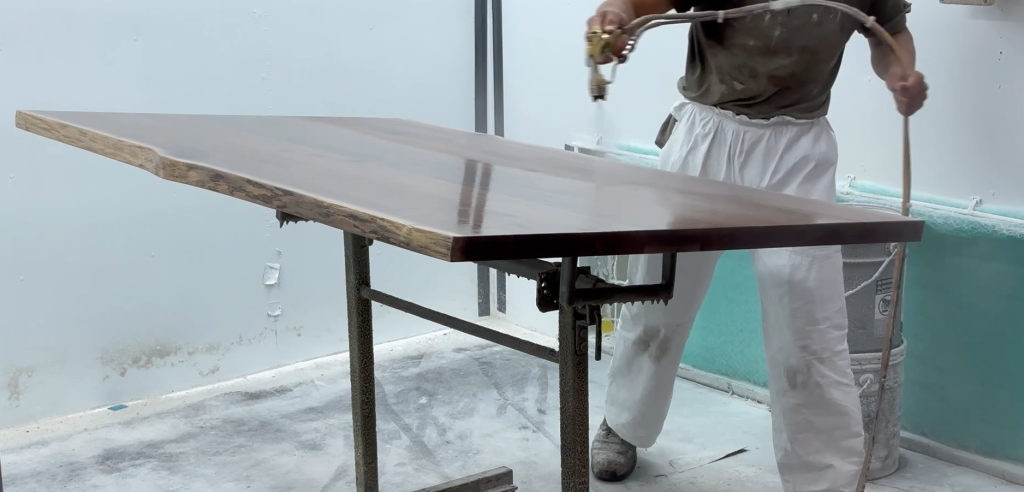
Once stained, we apply a hand-sprayed sealer coat. This coat does two important things: it locks in the color, and it begins the protective barrier that shields the wood from external elements like moisture, oils, and household chemicals.
As this sealer dries—typically in about 30 minutes—it raises the grain slightly and forms a unique micro-texture. Although the surface may feel a bit rough at this point, that’s actually a good thing. It means the surface is full of tiny molecular “hooks” that will later create a mechanical bond with the topcoat.
Step 3: Hand Sanding for Perfection
After the sealer dries, we carefully hand-sand the entire surface using ultra-fine grit sandpaper. This smooths out the micro-texture while simultaneously opening up the molecular structure of the sealer. Why is that important? Because it allows the topcoat to interlock with the sealer at a microscopic level, bonding all the way down to the wood grain.
This step is meticulous, but it’s what transforms a simple protective coating into a finish that feels buttery smooth to the touch.
Step 4: Topcoat Application and Natural Curing
The final layer is our premium catalyzed conversion varnish topcoat. Each topcoat is carefully hand-sprayed by our experienced finishers, giving us full control over the application. This topcoat chemically bonds with the prepared surface beneath, forming a deep, integrated finish that won’t chip, peel, or wear prematurely.
Unlike some manufacturers who rely on quick-cure ovens or UV systems, we allow each coat to cure naturally—over a 30-day period. This slower curing process results in a finish with superior clarity, richness, and depth.
Why It Matters
So why go through all this effort?
Because we believe that high-quality furniture should look as beautiful in ten years as it did the day it arrived. Our catalyzed conversion varnish finish doesn’t just sit on top of the wood—it becomes part of it. The result is a finish that resists moisture, scratches, heat, and household chemicals—while still letting the natural beauty of the wood shine through.
Whether you’re investing in a dining table, a dresser, or a custom credenza, you can be confident that the finish will stand the test of time—both aesthetically and functionally.
Experience the Difference
At Barkman Furniture, we’re passionate about every detail of the furniture-making process. From hand-selected lumber to the final coat of varnish, we approach each step with care, precision, and respect for the materials we use. Our Catalyzed Conversion Varnish finish is just one example of how we go the extra mile to ensure your furniture lasts for generations.
Our high-quality finishing process is designed to bring out the natural beauty of the wood while delivering exceptional protection against moisture, chemicals, and everyday wear.
After staining the wood to your desired color, we apply a hand-sprayed sealer coat that locks in the color and begins the protective process. As the sealer dries (in about 30 minutes), it raises the grain slightly and forms a micro-texture filled with millions of tiny molecules. This creates a surface that feels slightly rough to the touch—but it’s key to achieving a strong bond with the next layer.
We then hand-sand the sealer with fine-grit sandpaper, smoothing the surface and breaking open those tiny molecules. This allows our top coat to fully interlock with the sealer layer, bonding all the way down to the wood grain. The result? A fully integrated, ultra-smooth finish that not only looks beautiful but feels silky to the touch.
Unlike lacquer finishes, which can sit on top of the wood and wear more quickly, our system creates a more durable, long-lasting finish. And because we let each coat cure naturally over 30 days, instead of rushing it through a heat-cured system, the result is a deeper, richer, and more refined look and feel.